By Shaf Din
As we traverse the landscape of the twenty-first century, we find ourselves increasingly entangled in a world dominated by artificial intelligence.
From task automation to predictive analytics, AI’s capabilities are virtually limitless in certain domains.
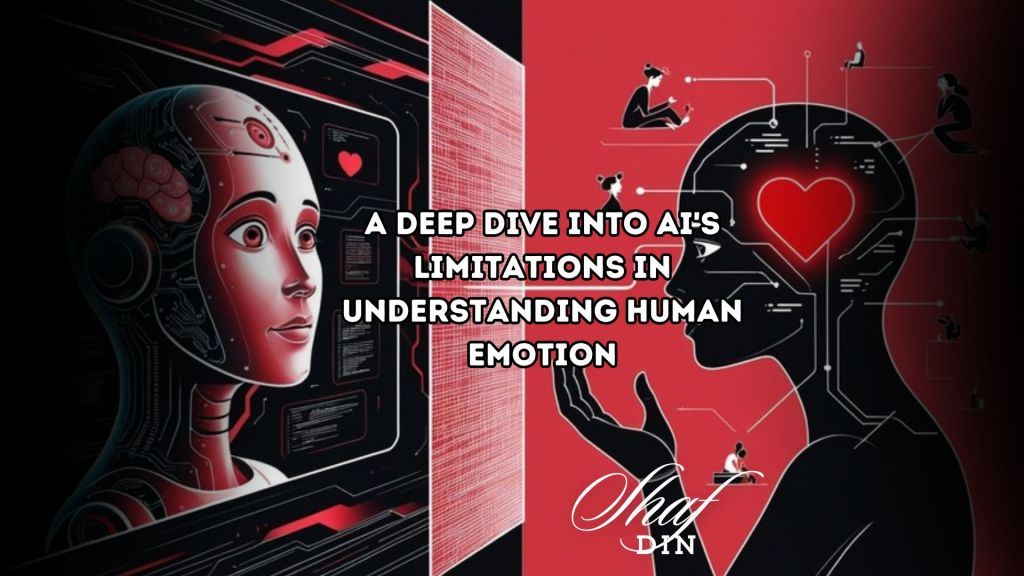
However, when it comes to understanding the intricacies of human emotion, AI encounters a formidable barrier—one that can be aptly described as the “uncoded paradox”.
This exploration delves into the struggle personal computers and AI systems have in grasping the nuances of emotional intelligence.
In doing so, we uncover the fundamental limitations AI faces in fostering genuine connections and truly understanding the human experience.
The Origins of Emotional Intelligence
Emotional intelligence (EI) is the capacity to recognise, understand, and manage our own emotions, as well as the emotions of others.
CI Hay Group and Daniel Goleman highlight the importance of emotional intelligence in personal and professional settings, underscoring how it impacts decision-making, relationship building, and even conflict resolution.
This multi-faceted construct can be summarised as follows:
- Self-Awareness: The ability to recognise your own emotions.
- Self-Regulation: Managing your emotions in various situations.
- Motivation: Using emotions to reach goals.
- Empathy: Understanding the emotions of others.
- Social Skills: Building and managing relationships.
The Algorithmic Challenge
While AI excels in processing vast amounts of data and recognising patterns, it inherently lacks the ability to experience emotions.
Here lies the crux of the uncoded paradox: algorithms can analyse emotional expressions—be they words, facial expressions, or physiological responses—but they cannot internalise these experiences in the way a human can.
Consequently, an AI system might be able to detect that a person is smiling and determine that this typically indicates happiness.
Yet, it cannot comprehend the underlying feelings that lead to that smile, nor can it adapt its responses in real time based on the nuanced interaction.
This deficit creates a significant gap in the relational depth AI can achieve.
The Role of Emotional Insight in Business
In the realm of business, emotional insight is invaluable. Leaders who are emotionally intelligent can inspire their teams, navigate conflicts, and build a cohesive workplace.
According to a study by TalentSmart, emotional intelligence is responsible for 58% of a leader’s job performance, establishing it as a critical competency for effective leadership.
AI tools promising enhanced productivity and decision-making inadvertently overlook the relational capacity that human leaders provide.
AI’s Limitations in Fostering Genuine Connections
When companies adopt AI-driven systems for customer service or relationship management, they often underestimate the importance of human touch.
While chatbots can efficiently answer queries, they lack the emotional nuance required to understand customer frustration, joy, or disappointment.
This oversight can lead to a disconnection that customers may find frustrating, prompting them to seek more human-centric interactions.
Innovative Approaches to Bridging the Gap
In light of these limitations, several innovative approaches can be explored to help businesses leverage AI while maintaining the critical human element:
- Hybrid Models: Combine AI tools with human oversight to create a smoother customer experience.
For instance, an AI chatbot can handle straightforward queries while escalating more complex emotional interactions to human agents. - Training and Development: Invest in training for individuals to develop their emotional intelligence, fostering an environment where technology and human insight work in concert.
- Feedback Loops: Implement feedback mechanisms where employees and customers can share their experiences, allowing organisations to refine AI algorithms based on real human interactions.
Looking Ahead: The Future of AI and Human Emotion
As we look to the future, the challenge remains for technology developers and business leaders to understand that AI is a tool—an incredibly powerful one, but one that cannot replace the human capacity for emotional connection.
Investing in the development of emotional intelligence in the workplace will not only enhance productivity but also foster a culture where relationships are prioritised, leading to increased employee satisfaction and customer loyalty.
In conclusion, while artificial intelligence continues to advance at a remarkable pace, its limitations in emotional insight cannot be overlooked.
By recognising the uncoded paradox of AI and understanding where it falls short, we can ensure that human empathy and emotional understanding remain at the forefront of personal and professional interactions.
Conclusion
By championing emotional intelligence alongside AI development, we can harness the strengths of both realms.
This will facilitate a more profound understanding of the human condition while enabling technology to support our ambitions effectively.
The journey may be complex, but the rewards—deeper connections, enhanced relationships, and a richer human experience—are undoubtedly worth the effort.
Connect with me as we explore these themes further and strive to bring emotional intelligence back into the core of our decision-making processes.
Relevant Hashtags
#AI #EmotionalIntelligence #Leadership #HumanConnection #BusinessStrategy #ShafDin #TechForGood #FutureOfWork #CustomerExperience #EmotionalInsight
Read More Blogs:
How Face-to-Face Nonprofit Marketing Strengthened My Resolve
The Benefits of Being Your Own Boss in 2025
From Apprentice to Entrepreneur: The Impact of Mentorship
Why Basic Sales Skills Did More for My Career Than My University Degree




 Shaf Din
Leave a comment