By Shaf Din.
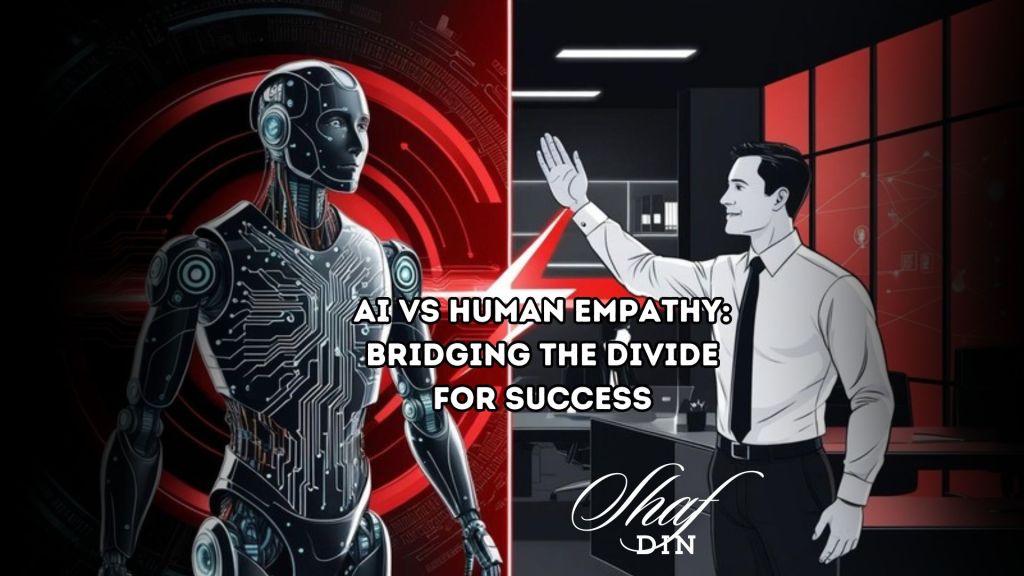
In an age where artificial intelligence (AI) relentlessly advances, it is crucial to critically assess the profound divide that exists between its capabilities and the essence of human emotional intelligence.
The rapid integration of AI into various sectors—healthcare, finance, customer service, and more—presents remarkable opportunities for efficiency and innovation.
However, as we embrace these developments, we must also illuminate the inherent gap in AI’s ability to understand and replicate the emotional insights that define our human interactions.
This exploration serves not only to bridge the divide but also to highlight the irreplaceable value of human empathy within an increasingly automated world.
Understanding Emotional Intelligence
Emotional intelligence—often abbreviated as EI or EQ—refers to the capacity to be aware of, control, and express one’s emotions, as well as the ability to handle interpersonal relationships judiciously and empathetically.
Unlike IQ, which measures cognitive abilities, EI encompasses a skill set that includes:
- Self-awareness: Recognising one’s own emotions and their effects.
- Self-regulation: Managing one’s emotions appropriately and healthily.
- Motivation: Harnessing emotions to pursue goals with energy and persistence.
- Empathy: Understanding the emotional makeup of other people.
- Social skills: Managing relationships to move people in desired directions.
The Limitations of AI
AI systems have made substantial progress, demonstrating remarkable prowess in tasks such as data analysis, pattern recognition, and even basic conversational abilities through chatbots.
Yet, despite simulating conversations and displaying data-driven insights, AI fundamentally lacks the ability to experience emotions. This shortfall results in a range of limitations, such as:
1. Lack of True Empathy
While AI can identify emotional cues from data—such as tone of voice or facial expressions—it cannot genuinely comprehend the emotional experience behind those cues.
This inability to feel or empathise profoundly impacts AI’s capacity for meaningful interaction.
2. Misinterpretation of Context
Human interactions are steeped in cultural nuances, historical context, and individual experiences.
AI’s reliance on algorithms and historical data makes it prone to misinterpretations, potentially leading to responses that are out of touch with the user’s emotional state.
3. Inability to Form Genuine Connections
AI may effectively imitate human conversation but fails to foster genuine trust and connection due to its inherent lack of emotional understanding.
This might impede customer satisfaction in service-oriented roles where empathy is key.
Emotional Intelligence in Business
Within the realm of business, emotional intelligence is paramount. Research indicates that organisations with higher levels of EI among employees tend to experience improved communication, collaboration, and overall performance.
While integrating AI into business operations can enhance efficiency, a harmonious blend with human emotional intelligence is essential for:
- Effective leadership: Leaders with high EI can inspire and motivate teams, fostering loyalty and commitment.
- Enhanced customer service: Employees who understand and respond to customer emotions contribute significantly to customer retention.
- Stronger workplace culture: Emotional intelligence fosters an inclusive and supportive work environment, where team members feel valued.
Bridging the Gap: A Collaborative Approach
As we navigate this evolving landscape, it is vital to embrace a collaborative approach that leverages both AI and emotional intelligence.
Here are some strategies for effectively bridging the gap:
1. Emphasise Training and Development
Investing in emotional intelligence training for staff can cultivate a workforce adept at navigating interpersonal dynamics, thus complementing the efficiencies offered by AI.
2. Combine AI Insights with Human Oversight
Utilising AI to gather data and insights while allowing human employees to make informed decisions based on emotional intelligence can achieve a balanced approach, maximising strengths and mitigating weaknesses.
3. Foster a Culture of Empathy
Organisations should prioritise a culture of empathy, encouraging open communication and emotional awareness.
This fosters deeper connections, perhaps supported by AI tools, all while maintaining a human touch.
Conclusion
As artificial intelligence continues to evolve, an astute understanding of its limitations in relation to emotional intelligence becomes increasingly important.
Recognising the irreplaceable value of human empathy allows us to navigate our automated world with greater insight, fostering environments where both AI and human emotional intelligence can coexist productively.
By bridging the divide, we pave the way for a future where technology enhances, rather than diminishes, the human experience.
Let us honour the intrinsic qualities that make us human while embracing the continuous advancements in technology—this balance may well be the key to navigating the road ahead.
Hashtags: #AI #EmotionalIntelligence #BusinessStrategy #HumanEmpathy #AIandEmotions #BridgingTheDivide #Leadership #CustomerService #WorkplaceCulture #ShafDin
Read More Blogs:
How Face-to-Face Nonprofit Marketing Strengthened My Resolve
The Benefits of Being Your Own Boss in 2025
From Apprentice to Entrepreneur: The Impact of Mentorship
Why Basic Sales Skills Did More for My Career Than My University Degree




 Shaf Din
Leave a comment